Who helps me
Who can use it
Who invented it
Who helps me
Who can use it
Who invented it
Who helps me
Who can use it
Who invented it

Who invented Patakara
This remarkable facial trainer was invented by Dr Akihiro Yoshiaki, professor at Tokyo Medical and Dental University (TMDU) and owner of his own private clinic. The story of Patakara began in Japan in the late 1990s, when a man came to his clinic suffering from facial paralysis after a stroke. As a result of his condition, he had difficulty pronouncing certain sounds and showed weakness or stiffness in the orbicularis oris muscle and other facial muscles. The doctor decided to help him and invented a device whose original purpose and main function were to develop and exercise the lips. The first Patakara prototype was based on a dental device. From this, Dr Yoshiaki created several models, which were tested by volunteers with similar conditions.
The extraordinary story of Patakara
«It all began on an ordinary day in the dental clinic. A patient who had suffered a stroke was looking for a way to improve the paralysis of his mouth. He came to see me after following a rehabilitation programme for six months. Unfortunately, his mouth had not fully recovered, so he decided to seek help from a dentist. And that dentist was me.
Although I am a specialist in dental health, the neurology of a stroke is not my field of expertise. While I was thinking about how to help this patient, an excellent idea came to me: to use my new oral cavity viewer to keep his mouth open while creating a closing tension in the muscles. And by stretching the oral and facial muscles, we were able to observe interesting results.
Before this happened, I was nothing more than an unknown dentist. But after that patient’s visit and the use of the oral cavity viewer, I unexpectedly discovered new possibilities for significantly improving oral health.
From that day on, I began to research the relationship between the mouth and the rest of the body. I faced many failures and challenges, and there were moments when I thought of giving up. However, I decided to continue persevering with the purpose of improving other people’s health and helping to prevent diseases of the human body.
That passion was what ultimately led me to the development of Patakara. What you now hold in your hands is the result of an unexpected discovery and an infinite passion to solve a patient’s health problem.»
Dr Akihiro Yoshiaki, inventor of Patakara.
After some time, both the patients and the inventor himself were pleasantly surprised by the additional effects of Patakara: among other things, diction and physical appearance improved noticeably. The tests showed that, through short exercises with the device, it was possible not only to strengthen the muscles of the mouth and improve certain alterations or after-effects, but also to exercise the facial muscles. After one month of practice, facial features became clearer and more expressive, the face lifted and regained symmetry, and the skin became more elastic and fresh-looking.
Dr Akihiro Yoshiaki then began more in-depth work to perfect the characteristics of his invention and study the results of its application. Fifteen years passed between the first prototype and the release of the latest version of the trainer. Throughout that time, the doctor and his team carried out several scientific and medical studies, recording the results and searching for new ways to help all kinds of people.
As a result of their work in senior care homes, the researchers concluded that training with Patakara could help improve the general condition of the brain, revealing its potential as a complementary supportive therapy in conditions commonly associated with older age, such as dementia, Alzheimer’s disease, Parkinson’s disease and others.
At the same time, studies were also carried out with children with Down syndrome. Due to chromosomal abnormalities, children with this genetic condition often show a lower level of cognitive development than other children of the same age. Through daily stimulation with Patakara of the facial nerve and the group of muscles associated with it, the doctor reached the conclusion that, «even in the presence of genetic diseases, if continuous stimulation helps to create new biological systems of compensation and restore signal transmission, it may be possible to support the development of intelligence». After six months of training with the device, children with Down syndrome took a test to assess their level of cognitive development. With regular use of the facial trainer, positive progress was observed.
Professor Shinichi Kita, a specialist in oral and maxillofacial surgery at Asahikawa Medical University, Japan, uses Patakara with patients who have TMJ disorders, such as temporomandibular joint arthritis. In his practice, 80% of his patients benefit from training with Patakara. Professor Kita believes that daily work with the facial trainer helps correct imbalances in the facial muscles, improves the function of the autonomic nervous system, relieves bruxism, and contributes to the treatment of TMJ arthritis.
Positive results were also obtained in studies involving people with nasal breathing problems, snoring, bad breath, dry mouth and pauses in breathing during sleep, including cases in which sleep apnoea disappeared completely. Facial muscles overlap and interweave with one another, and are directly or indirectly connected to the orbicularis oris muscle. Through the stimulation of this muscle, the use of Patakara helps restore the tone of both the face and neck muscles. For this reason, working with Patakara not only helps restore the natural tone of the facial muscles, but also helps correct the position of the tongue. As muscle strength and tone improve, nasal breathing also improves, and the problems associated with mouth breathing are reduced or eliminated, which may contribute to positive changes throughout the body.
Doctor Akihiro Yoshiaki has borrowed the idea of the trainer’s name from Japanese speech therapists. The speech gymnastics used in the patients’ rehabilitation contains exercises for articulation of PAPA-TATA-KAKA-RARA syllables. The doctor has abbreviated these elements and obtained the amazing name of PATAKARA.
According to available references, thousands of clinics in Japan have used the Patakara method as a support tool in the treatment of maxillofacial disorders, speech disorders, and recovery processes after surgical procedures. In Europe, the facial trainer has also gradually gained recognition.
Over time, the effects of Patakara attracted interest beyond the clinical field. Many Japanese women have incorporated it as a natural tool to care for, improve and maintain the beauty of the face. Today, we know of many admirable transformations in Patakara users of different ages and from different countries.
Around the world, many people have already discovered Patakara exercises and use them with excellent results to improve and rejuvenate the face naturally, without surgery. Start working with yourself: the first results may become the best motivation to continue training and improving your appearance.
Who can use Patakara
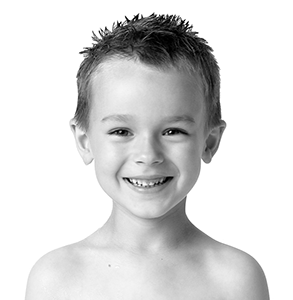
Patakara can be used by anyone from the age of 4. It is made from the highest-quality medical and cosmetic-grade material. It is safe, painless and easy to use, and requires no previous experience.
The standard Patakara model, Patakara Premium, measures 47 mm and is suitable for most adults and children from the age of 4. There is also a model specially designed for younger children: Patakara for Children, measuring 30 mm, recommended for children between 18 months and 4 years of age. Although our experience shows that the vast majority of adults can use the Patakara Premium model, in very exceptional cases Patakara for Children may be suitable for an adult with a particularly small oral cavity.
Training with Patakara combines a very simple basic exercise with a series of 12 postures, each lasting just 5 seconds. Once you have your Patakara, you will receive the instructions needed to learn how to use it correctly and make the most of its possibilities.
Although the main purpose of using this facial trainer is explained in What is Patakara, the reasons for using it may vary from person to person: improving the tone of the oral and facial muscles, supporting a better position of the lips and tongue, helping to reduce accumulated tension in the face, accompanying the natural care of facial appearance, or working on certain habits related to mouth breathing.
The results of the training are individual and depend on consistency, each person’s starting point, and the characteristics of their facial, neck and oral muscles.
Despite the high safety of the method, we recommend that you read our Precautions for use carefully. If you are in the acute phase of an illness, if you have doubts about your particular case, or if you are undergoing medical treatment, consult your doctor or specialist before using Patakara.
If you need help or more information, write to us at contact@patakara.eu.
Who helps me with Patakara
As an official distributor, Patakara.eu guarantees the authenticity, quality and safety of Patakara products, as well as a professional and friendly service before and after purchase.
When you buy your Patakara from Patakara.eu, you do not receive only the product. You also gain access to a complete, clear and detailed user guide, developed by our team from years of experience and practice with Patakara.
The manufacturer includes only a brief manual in Japanese in the original box. For this reason, at Patakara.eu we have created our own instructions in several languages, with step-by-step explanations, images, videos, usage advice, maintenance recommendations and answers to the most frequently asked questions. All this material is designed to help you use your Patakara correctly from the very first day.
We also offer complementary resources, private classes, programmes and additional courses for those who would like more personalised support. These services are contracted separately and are available in our store.
We know that each person starts from a different situation and has different goals. That is why, if after reading the instructions you have a specific question about using your Patakara, you can write to us at contact@patakara.eu. We will do everything we can to guide you and help you resolve your questions.
You can also follow us on Facebook, Instagram and Telegram, where we share photographs, videos, news, tips, recommendations, user results… and many other contents related to Patakara.
We are here to help you start well and accompany you throughout the process.


SHOPPING
ADDITIONAL INFORMATION
© 2017- 2026 Patakara.eu
Official Patakara Distributor
All Rights Reserved.